Describe the pattern, not a guessed diagnosis
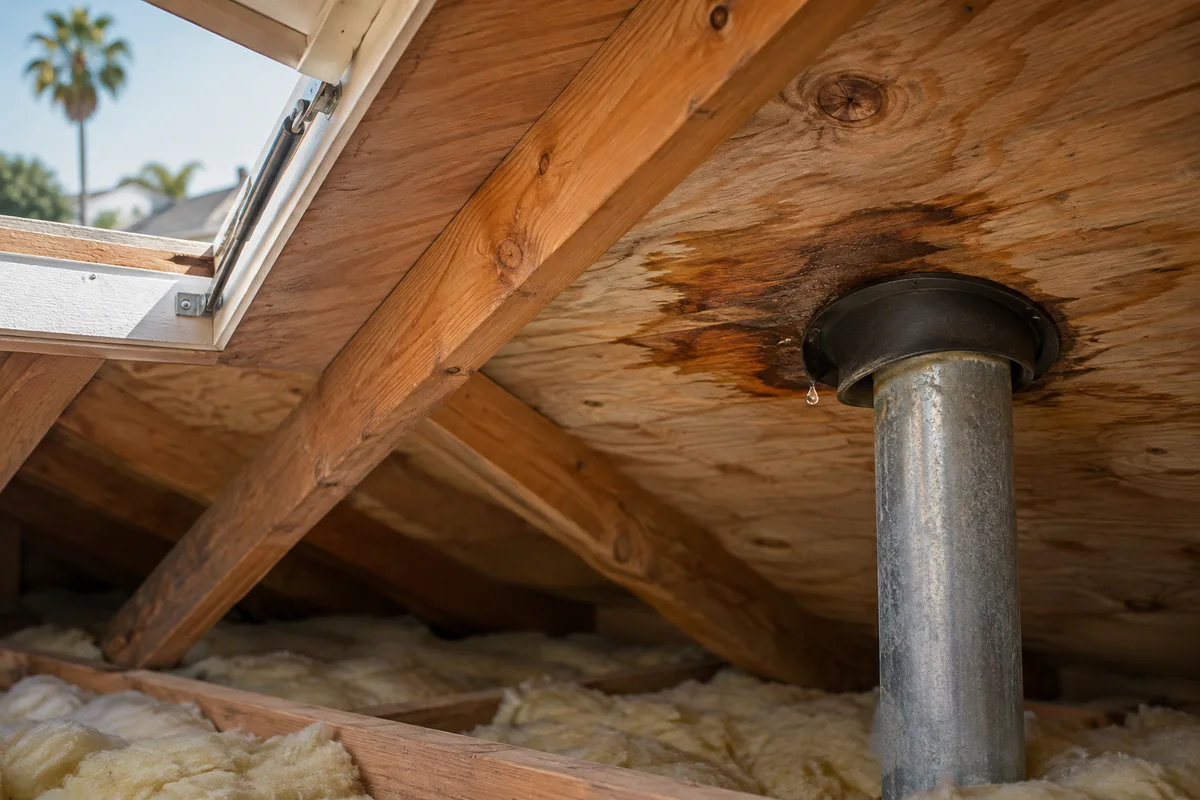
Water can become visible away from its entry point. The room location still helps, but add timing and context. Does it appear during a long rain, near the start of a shower or after water has stopped falling? Is the symptom a drip, damp trim, staining or a change you noticed when moving furniture?
Bring earlier repair invoices, roof records and any safely taken photos. Mention roof-mounted equipment, skylights or adjoining walls near the concern. Those details help establish what has already been changed and what needs review. Avoid covering the evidence with interior finish repairs before the source question has been addressed.
- Record the date and room location.
- Photograph the visible symptom from a safe position.
- Note recent roof, solar, antenna or exterior work.
Keep safety separate from the estimate
Stay clear of wet electrical equipment, sagging ceilings and areas where material may fall. Do not enter an unsafe attic or climb onto a wet roof. When there is immediate danger to people, contact emergency services or the appropriate utility rather than waiting for a roofing inquiry to be returned.
Let the person answering your call know whether the leak is active and whether access is restricted. Temporary protection and permanent repair are different scopes. Ask what a proposed visit includes, what conditions may prevent work and how any temporary measure will be followed by a later repair decision.
Tie the repair to the findings
Ask which detail is suspected, what supports that conclusion and what remains uncertain. Roof covering, flashing, penetrations and adjoining assemblies can require different work. A clear proposal identifies the area to be opened, the materials involved and the way the repair joins the surrounding roof.
If a repair is proposed after earlier patching, discuss what will be removed or retained. More material placed over an old patch is not an explanation by itself. Ask how concealed conditions will be handled if opening the area changes the understanding of the problem. Approval and pricing duties should be written down.
Decide what follow-up will mean
A leak inquiry can involve both roofing work and interior repairs. Keep those responsibilities separate in the agreement. Drywall, paint, insulation or other affected materials may require additional assessment or another trade. Do not assume they are included in a roofing quote simply because they were discussed during a visit.
Ask what completion information you will receive and whom to contact if the symptom returns. Keep photos, dates and the repair description together. To begin, call Crown Ridge at (310) 923-7839 with your Lawndale address and a short description. Appointment timing, visit scope and any fee should be confirmed directly.
Questions before the next step
Can you locate a leak from a ceiling photo?
A photo can explain the symptom, but it does not prove the entry point. The roof and adjoining details may need review. The investigation scope should be agreed before a repair is treated as confirmed.
Does leak repair include repainting the ceiling?
Only if the written agreement specifically includes it. Roofing work and interior restoration are separate tasks. Ask who is responsible for each and when interior finishing can proceed.
Is a temporary cover a permanent repair?
No. Ask what the temporary measure is intended to do, its limitations and the next step toward a permanent scope. Availability and site conditions must be confirmed when you call.
Planning references
Confirm current requirements for your property and selected roof system before work begins.