
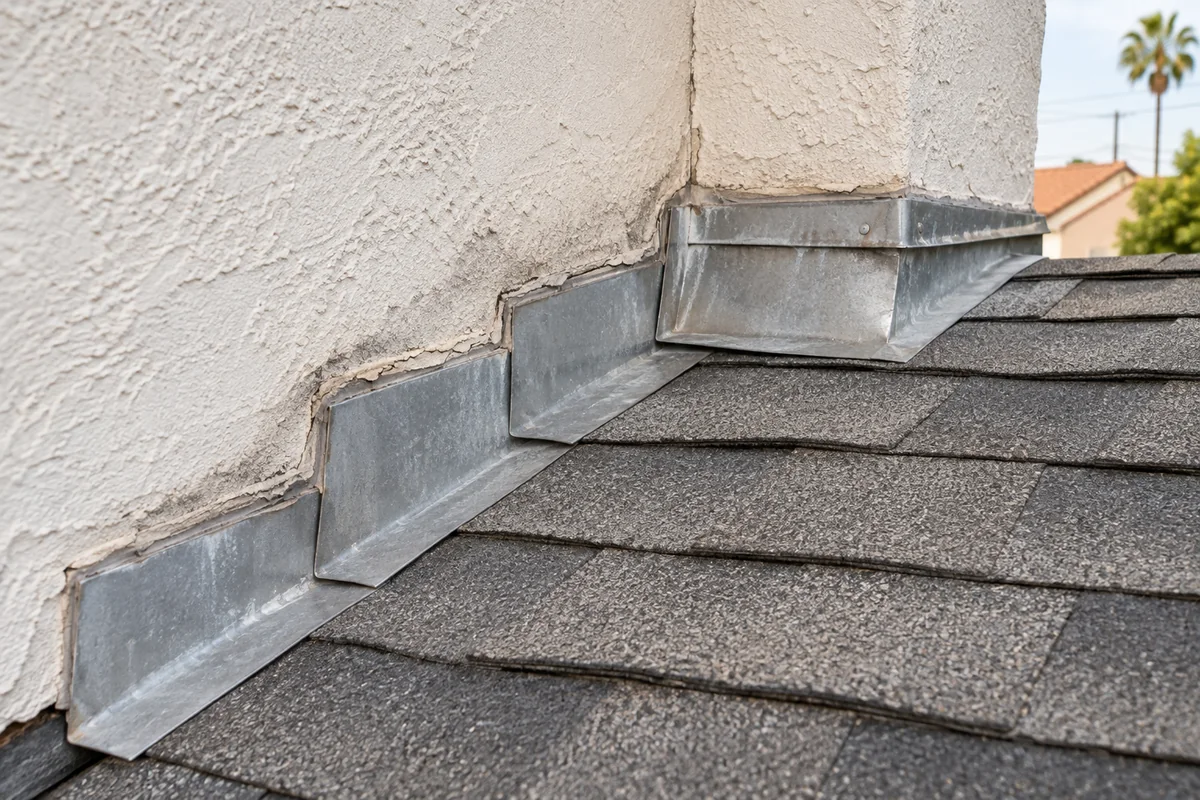
Identify the connection before naming the fix
Flashing work can involve roof-to-wall junctions, valleys, chimneys, pipes and other penetrations. Those locations do not all use the same detail. Ask which connection is being reviewed and what condition supports the proposed repair. A ceiling stain near an opening may be useful evidence, but it does not confirm the source by itself.
Earlier patching can make the original arrangement harder to see. Share repair records and describe when symptoms returned, if they did. The review may need to distinguish the existing flashing, surrounding covering and adjoining wall or equipment. Keep those components separate in the conversation so the scope does not become vague.
- Name the location and any recurring symptom.
- Share records of earlier patch or flashing work.
- Ask how the repair connects to adjoining materials.
Make access and removal part of the scope
Repairing a connection may require removing nearby roof covering or opening an adjoining finish. Ask which materials will be disturbed and who restores them. Siding, stucco, masonry or equipment work may involve responsibilities outside the roofing agreement. Those duties should be assigned before the area is opened.
If existing materials are being reused, discuss their condition and what happens if they cannot be put back as planned. The quote should explain any matching limits or replacement allowance. A small visible detail can involve a wider work area, and that boundary should be clear in the proposal.
Ask how the repair sheds water
A useful explanation connects the proposed flashing to the roof covering and underlying components. Ask how the selected materials and installation details fit the roof system. Manufacturer guidance can help frame that review, but the final detail must address the actual building and the materials it meets.
Sealants may have a role in some assemblies, yet the proposal should identify the intended work beyond a general promise to reseal everything. Ask which pieces are being replaced, which are retained and what evidence supports that choice. If the cause remains uncertain, further investigation should be clearly identified.
Set the change and follow-up process
Opening a detail may reveal concealed damage or an arrangement that differs from what was expected. Agree on how those findings will be shown and how additional work will be priced and approved. If another trade is needed, clarify the handoff and the work that must happen before roofing can be completed.
Keep the repair description, location photos and completion information together. They give future roof conversations a better starting point than a note that says only “leak fixed.” Call Crown Ridge at (310) 923-7839 with your Lawndale address and the connection you are concerned about to discuss the next step.
Questions before the next step
Can flashing be repaired without replacing the whole roof?
A focused scope may be possible, depending on the condition and access to the detail. Ask how the repair joins the surrounding roof and what limitations would remain after the work.
Will resealing around a vent stop the leak?
That cannot be determined from the location alone. The flashing, covering, penetration and nearby details need review. Ask what supports the proposed repair rather than assuming sealant is the answer.
Does flashing repair include stucco or siding work?
Only if it is stated in the agreement. Some details require access behind adjoining finishes. Confirm who opens and restores those materials and how that work is coordinated.
Planning references
Confirm current requirements for your property and selected roof system before work begins.